Reflecting on the Implied Freedom of Political Communication in a Post-Bondi Landscape
Summer of Silence? Navigating NSW’s Sweeping New Protest Restrictions
Reflecting on the Implied Freedom of Political Communication in a Post-Bondi Landscape.
In the wake of the tragic Bondi events, New South Wales is witnessing a rapid legislative shift. While the government argues that "words lead to actions" and seeks to prevent "ruinous" mass protests, legal experts and civil libertarians are raising urgent questions about the constitutional validity of these moves.
The Three Pillars of Reform
The NSW Parliament has introduced bills that address three primary areas, each carrying significant implications for free speech:
- Symbol Bans: Prohibiting the display of Nazi symbols and symbols of "prohibited terrorist organizations" (as defined by the Commonwealth Criminal Code).
- Ideological Indication: Laws targeting chants, slogans, or imagery that indicate support for Nazi ideology.
- Public Assembly Restriction Declarations: A new power allowing police to prevent protests from being "authorized" following a terrorist incident.
The Constitutional Friction
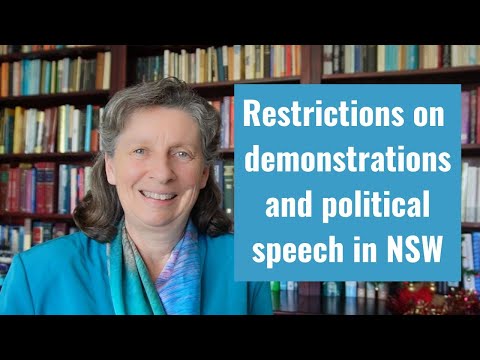
As Professor Anne Twomey explains in the Constitutional Clarion video above, these laws face a looming shadow: the High Court of Australia. The "implied freedom of political communication" is not an absolute right, but any law that burdens it must be "reasonably appropriate and adapted" to a legitimate purpose.
The core of the challenge lies in the "Public Assembly Restriction Declarations." While they don’t technically "ban" a protest, they strip away its authorized status. This makes every participant liable for prosecution for common acts like blocking a footpath. If the law is found to be a disproportionate burden on political speech, it may be struck down.
— NSW Premier Chris Minns
A Progressive Christian Perspective
As a community that often finds its voice in the streets—marching for refugees, climate action, and indigenous justice—we must look at these "emergency" powers with a discerning eye. While we unequivocally reject hate speech and Nazi ideology, we must ask: Who decides which "words lead to actions"?
When "public assembly" is defined broadly enough to include static rallies in parks and beaches, and police are given the power to preemptively de-authorize gatherings for up to 90 days, we risk creating a precedent where the state can stifle dissent in the name of "calm."



No comments:
We Value Your Feedback!
Please take a moment to share a comment or your thoughts using the form.